Turn Hard Work Into Better Exam Performance
Performance psychology for doctors preparing for high-stakes medical exams.
If you are studying hard but still unsure whether your preparation is working, the problem is rarely effort alone.
Dr Tremayne helps doctors build clearer systems for study, practice, mistake review, pressure management, and exam-day performance.

Performance psychology for medical exam candidates
Is This You?
Doctors often reach out when they are thinking:
These are usually not motivation problems. They are often preparation-system and performance-system problems.
The goal is not simply to do more. The goal is to make your preparation more effective, more targeted, and more exam-ready.
This Is Not Medical Content Tutoring
This work does not teach medical content, replace specialty teaching, or promise exam results.
Instead, it focuses on how you prepare and perform.
Not primarily this
- More medical content
- More resources
- More passive review
- Generic motivation
- Exam guarantees
Instead, the focus is this
- Better study structure
- Better use of questions and practice exams
- Better mistake review
- Better exam-condition preparation
- Practical performance planning
The 1:1 Exam Performance Planning Session
A focused 50-minute online session for doctors who need a clearer, more practical exam preparation plan.
We step back from the detail, identify what is helping or limiting your progress, and clarify what needs to change next.
What is working?
Identify the parts of your preparation that are useful and should be protected.
What is getting in the way?
Locate the barriers affecting progress, recall, confidence, or performance.
What needs to change?
Turn the discussion into practical next steps for study, practice, review, and exam preparation.
What You Leave With
- A clearer understanding of what is most likely limiting your progress
- A realistic study structure around your roster and exam timeline
- Specific changes to your study, practice, mistake review, and pressure preparation
- Practical next steps you can implement immediately
Why Effort Alone Is Not Always Enough
High-stakes medical exams are not just tests of knowledge. They also test retrieval, reasoning, timing, judgement, communication, emotional control, and the ability to perform under pressure.
The practical question is: can I produce the required performance under exam conditions?
Common Reasons Doctors Seek Help
Doctors preparing for high-stakes exams often come to this work because they are facing a specific preparation or performance problem.
About Dr Kell Tremayne
Dr Kell Tremayne is a performance psychologist and Senior Lecturer in psychology at the University of Technology Sydney. He works with doctors preparing for high-stakes medical exams, helping them build clearer systems for study, practice, mistake review, pressure management, and exam-day performance.
This work builds on the long-standing Dr Tremayne approach to performance psychology for medical exam candidates, including Dr Patsy Tremayne’s extensive experience supporting doctors.

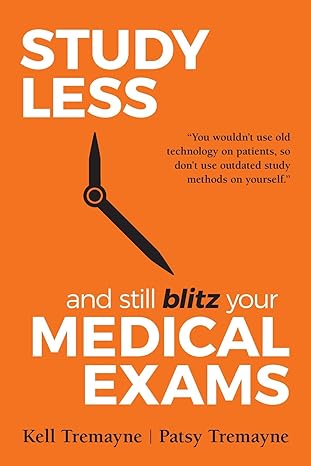
Author credibility: Dr Kell Tremayne is co-author, with Dr Patsy Tremayne, of Study Less and Still Blitz Your Medical Exams, a practical guide for doctors preparing for medical exams.
Not Ready to Register Yet?
These resources may help you explore study systems, exam performance, and common preparation problems before deciding whether a session is the right next step.
Study Smarter Resources
Practical ideas for making exam preparation more structured, targeted, and effective.
Explore ResourcesNewsletter
Updates on study, pressure, performance, wellbeing, and sustainable preparation.
View NewsletterExam Performance Articles
Common medical exam preparation problems and practical next steps.
Read ArticlesReady for a Clearer Exam Preparation Plan?
If you are studying hard but not sure whether your preparation is working, you can register your interest in a 1:1 Exam Performance Planning Session.
If the session appears relevant, you will be invited to complete a short pre-intake form before booking.
Recent Articles


-
Viva Answer Structure for Medical Exams
Jul 11, 26 10:42 PM
Structure medical viva answers by framing the response, stating the key point, making reasoning audible and stopping cleanly under examiner pressure. ` -
How to Prioritise Points in SAQ Answers
Jul 11, 26 10:11 PM
Prioritise medical SAQ points by identifying the task, ranking clinical value, writing likely marking points first and removing low-yield detail. -
How to Structure SAQ Answers Under Time Pressure
Jul 11, 26 09:51 PM
Structure medical SAQ answers under time pressure by identifying the task, planning markable points, prioritising content and protecting completion.